Blacksheep Mind Get the book, $12

A Blacksheep Mind web book · Brand and design

You nodded along, paid, and still aren’t sure what you bought.

Most of what you were told about design was true. One part cost you. Eight short rounds of two truths and a lie, for owners who’ve paid for a logo, a sign, a menu or a website, or are about to.

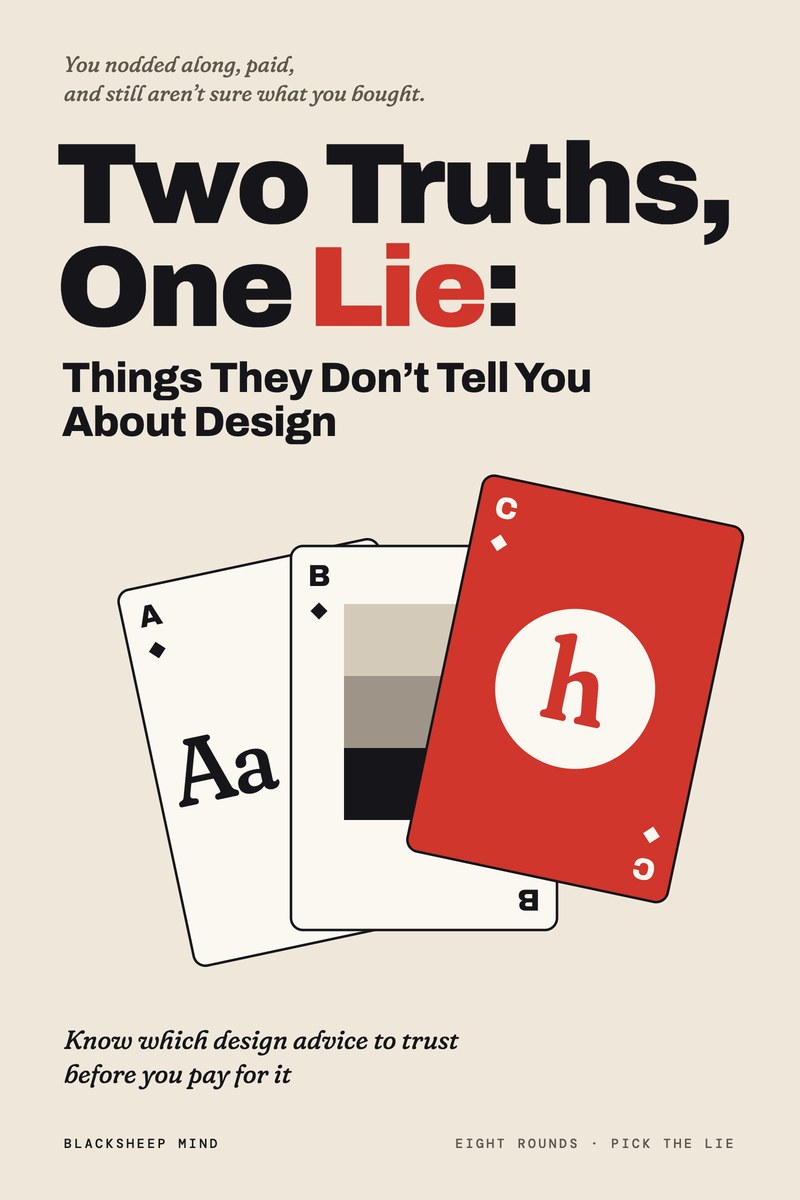
Two Truths, One Lie: Things They Don’t Tell You About Design. Know which design advice to trust before you pay for it.

The cover of Two Truths, One Lie: Things They Don’t Tell You About Design.
A web book: read it online and download a copy. Nothing is posted to you.
Chapters
8
Tools
3
Reading
52 min
Price
$12
Get the book, $12

Read it tonight on your phone or laptop. One price, no upsells. No refunds: you get the whole book straight away.

Play one round

Two of these are true. One costs owners money.

  • A. Your logo doesn’t need to show what you sell.
  • B. A better logo will bring you more customers.
  • C. Paying for a logo doesn’t automatically mean you own it.

Picked one? The lie is B. A logo helps people remember you, but it rarely decides whether they come in. Why it sounds so true, and what to check before you pay for a new one, is Round 1. Seven more rounds follow, from colors and fonts to paying a designer.

What’s inside

Eight rounds, in the order the bills arrive

  1. 01

    Your Logo

    What a logo can and can’t do for you, and the part of paying for one that nobody mentions until the sign maker asks.

  2. 02

    Colors and Fonts

    The color chart on every blog, the favorite color you felt guilty about, and the font license nobody told you about.

  3. 03

    Templates and AI Tools

    Where templates and AI tools earn their place, and what to check before one makes the mark you keep for years.

  4. 04

    Menus, Labels and Signs

    Why the teal on your laptop can come out gray on paper, and how to find out before you pay for 500 of anything.

  5. 05

    Your Website

    What a new website can change, what it can’t, and the one part of it that has to be in your name.

  6. 06

    Posts and Going Viral

    What decides how far a post travels, and where your design hours are better spent.

  7. 07

    The Rebrand

    Why a new look feels like the answer to a slow month, what it really costs, and what your regulars notice.

  8. 08

    Paying a Designer

    Three quotes for one job, and how to compare what each one includes, not only the number at the bottom.

Plus a short introduction on how to play, and a closing chapter with nine rules and the brief for your next job. 8 rounds, about 52 minutes to read.

A page from the book

Before you sign the website quote

Round 5 · from the book, word for word

Your Website

A case

The quote with a comma in it

Tariq runs a house-cleaning company with two vans and five cleaners. A web agency emailed to say his site was “turning customers away” and quoted $6,500 for a new one.

His first reflex was to sign. The site was five years old, and it looked it.

Instead, he opened his website builder’s visitor numbers: about 40 visits a week, most of them from his Google listing. He asked his last 10 new customers how they’d found him. Six said a neighbor, three said Google Maps, and one had seen the van.

Then he checked who held his web address. It was the freelancer who had built the site five years earlier, under her own email. He wrote her a friendly note asking her to move it into his account, and she did it that week.

He didn’t sign the quote. The web address was in his own account by Friday, with his own card paying the renewal. The $6,500 stayed where it was until he could say what a new site would change.

What to say
Instead of

“Can you just handle the domain for me?”

Try

“Please register the web address in [business name]’s name with my email as the owner, and add yourself as a user. I’ll pay the renewal.”

Instead of

“We need a new website to get more customers.”

Try

“Here’s where our customers come from today. What would a new site change for the people who already visit?”
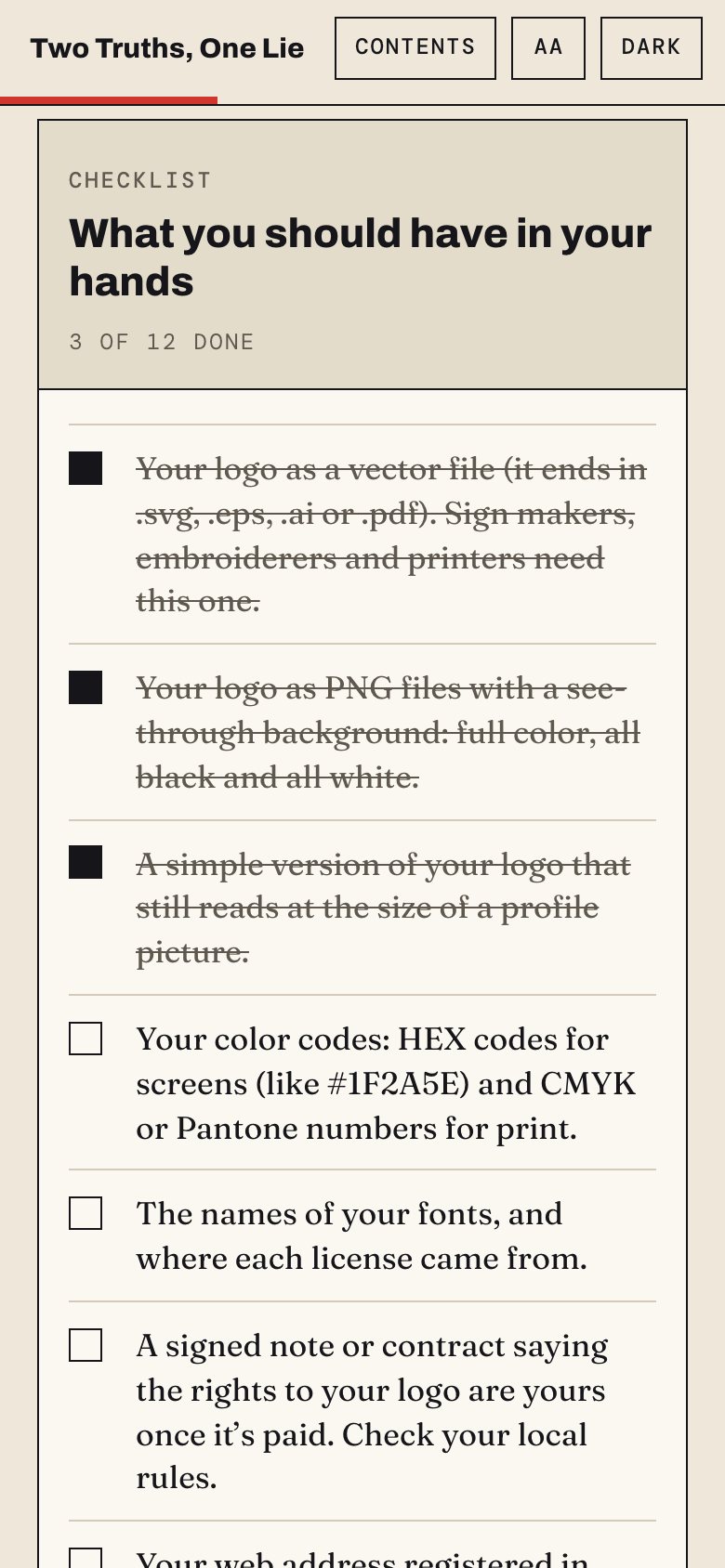
The What you should have in your hands checklist in the web book, on a phone, with three items ticked.
What you should own, ticked off on your phone
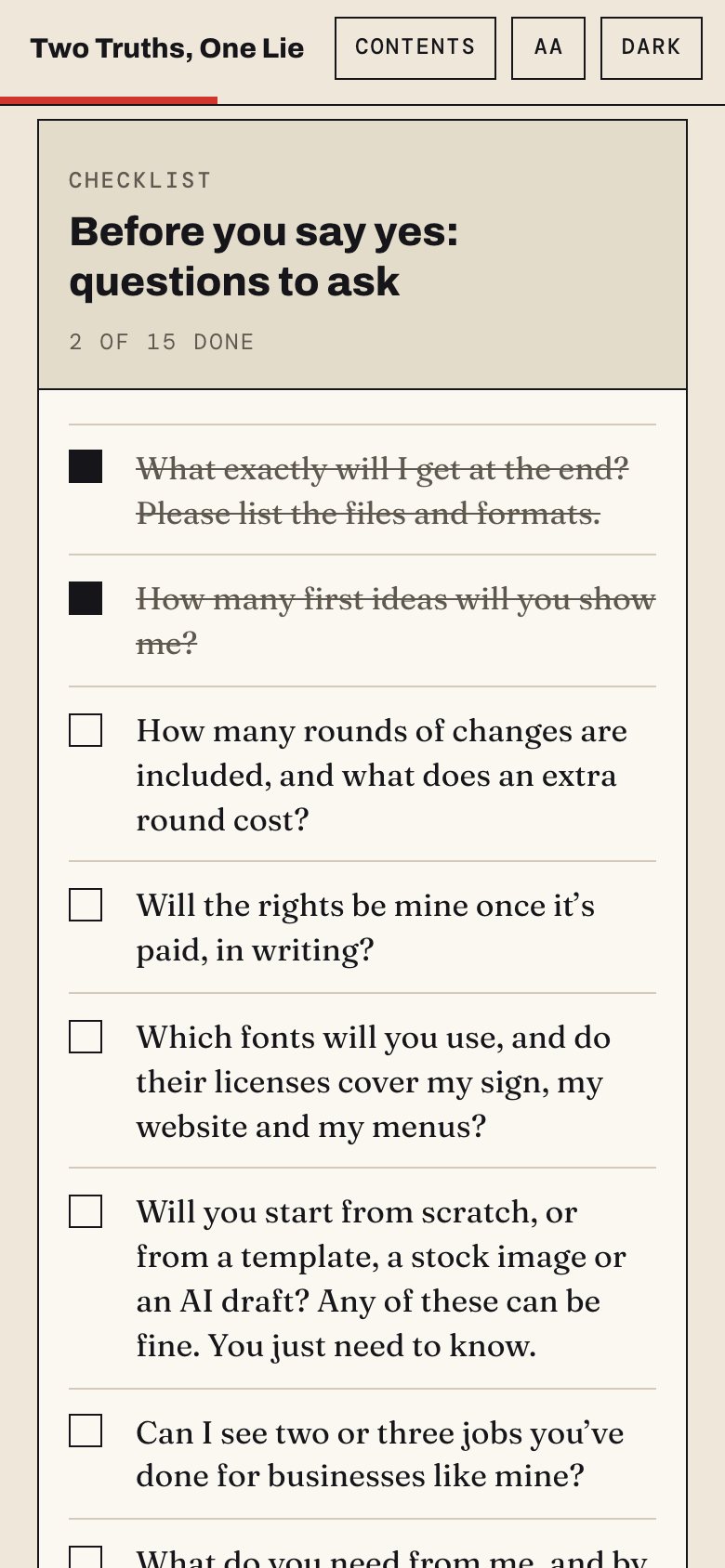
The questions to ask before you pay, a checklist in the web book, on a phone, with two items ticked.
The questions to send before you say yes

The tools

Three things to keep with your invoices

  • ChecklistWhat you should have in your handsEvery file, color code, login and signed note you should own once a design job is paid. Use it today, even if you paid years ago.
  • ChecklistBefore you say yes: questions to askThe same questions for every designer you ask, so three quotes turn into three things you can compare.
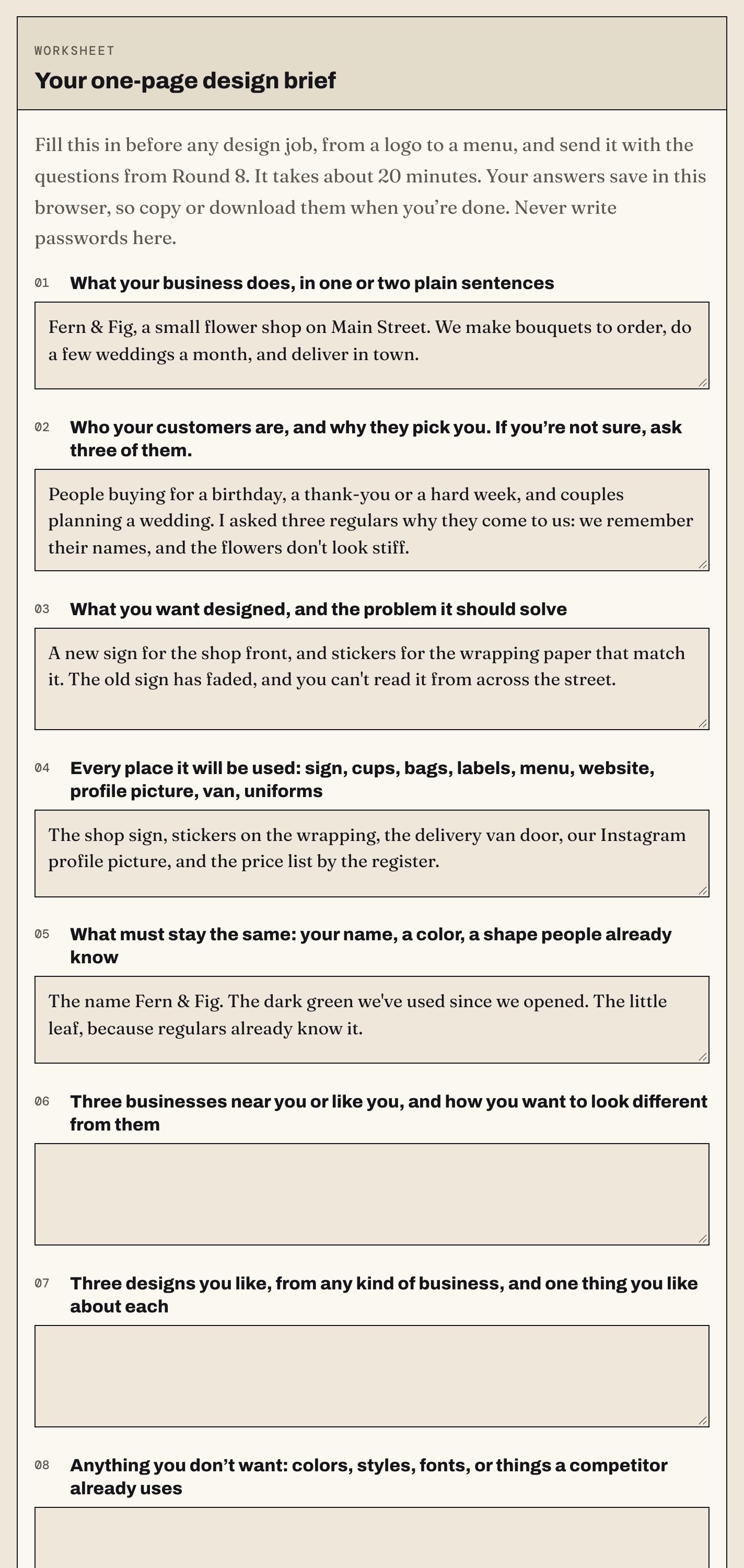
  • WorksheetYour one-page design briefWhat you want, where it will be used, what must stay the same, your budget and what you need at the end. About 20 minutes, for any job from a logo to a menu.
The one-page design brief worksheet in the web book, part filled in with an example.
The one-page design brief, with a made-up example filled in

Who it’s for

For owners who pay for design, or are about to

For you if

  • You run a cafe, bakery, salon, barbershop, shop, trade, studio or small online store.
  • You’ve paid for a logo, a sign, menus, labels or a website, and you’re not sure what you got.
  • You’re about to pay for design and can’t tell the quotes apart.
  • You help an owner with this, and want the money to go on the right things.

Not for you if

  • You want to design your own logo. That’s our DIY Branding Like a Pro for Small Businesses.
  • You want legal advice on who owns your logo or web address. It gives the general rule and tells you when to ask a lawyer.
  • You want a book against designers. Good ones will agree with most of this one.
Get the book, $12

8 rounds · 3 tools · read tonight

Your questions

Before you buy

I’m not a design person. Will I follow it?

Yes. It’s written in plain words, and every design term, like “vector file”, is explained the first time it comes up.

Is this legal advice about who owns my logo?

No. It explains the general rule in the US, tells you what to ask for in writing, and says when to check your local rules or talk to a lawyer.

Will it teach me to design my own logo?

No. Another book on this shelf does that. This one helps you decide what to pay for, what to own and what to ask.

Is it against designers?

No. The lies are beliefs owners hold, and often ask designers for. Several of the truths protect designers too, like a clear brief and an agreed number of changes.

I’ve already paid. Is it too late?

No. The checklist of what you should own is for people who’ve already paid. It tells you which files and logins to ask for, and the book gives you the words to ask.

How long does it take?

About 52 minutes to read. Each round takes five or six minutes, and the brief takes about 20 minutes to fill in.

Two Truths, One Lie: Things They Don’t Tell You About Design

Read it before your next design invoice.

$12one price, no upsells
Get the book, $12

A web book: read it online and download a copy. Nothing is posted to you. No refunds: you get the whole book straight away.