Decision 1 · from the book, word for word
Decide What Your Posts Are For
So people know we’re here
Tomás runs a bike repair shop with one mechanic and a workbench in the window. He posted a bit of everything on three apps: shiny bikes customers brought in, a meme about Mondays, a spring sale, a staff birthday. When his partner asked what it was all for, he said “so people know we’re here,” and couldn’t get any further.
His first reflex was to post more often. Instead, he scrolled back through his last 20 posts and wrote a job next to each. He couldn’t name one for 11 of them.
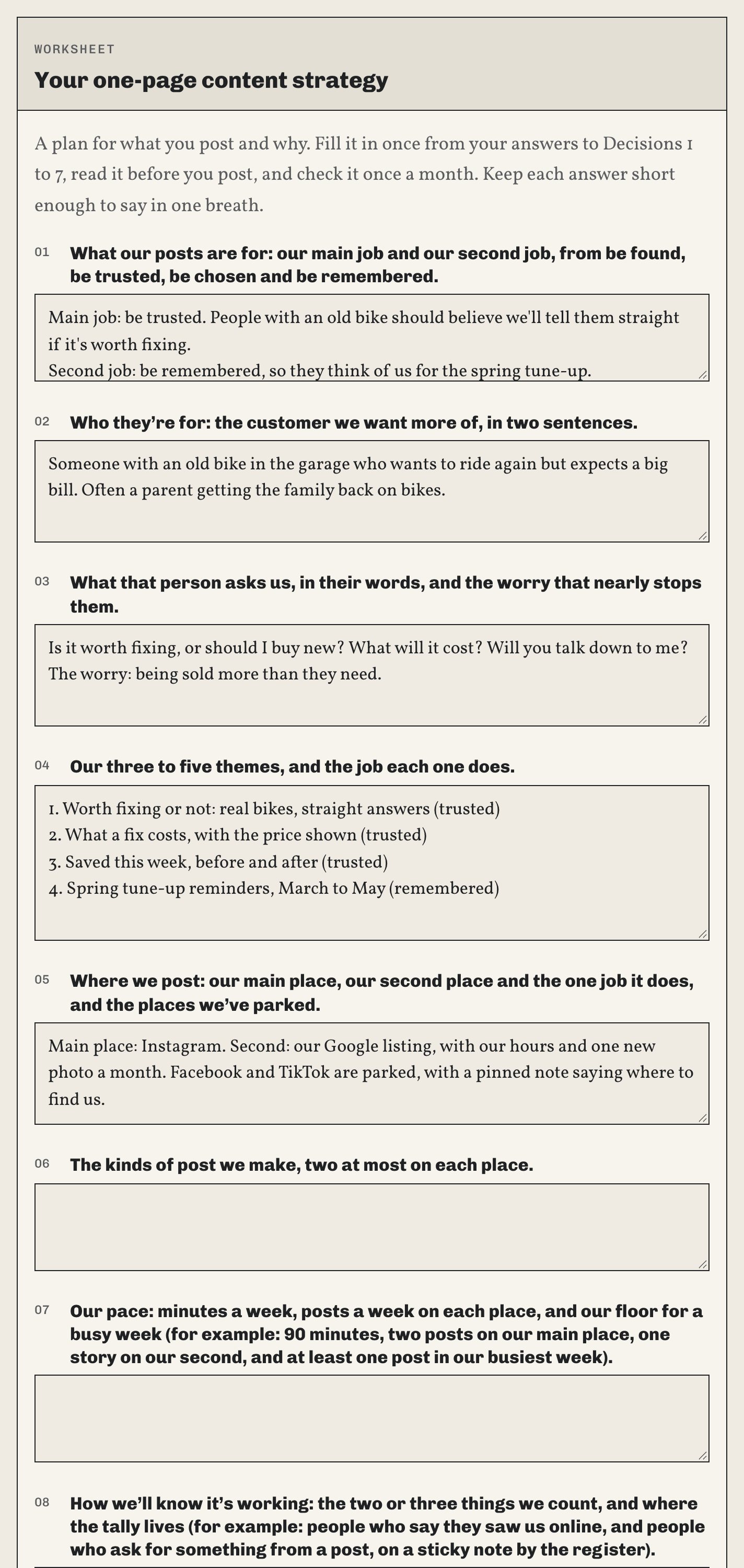
Then he listened to what people asked at the counter. Most of it came down to two worries: was an old bike worth fixing, and would he overcharge them? So he made “be trusted” his main job, with posts on what common fixes cost, what’s worth fixing and what isn’t. “Be remembered” became his second, for the spring tune-up, when bikes come out of garages.
Over the next month he posted less often than before, but every post had a job. Four customers at the counter mentioned his “is it worth fixing?” posts.
- Scroll back through your last 20 posts, across every app you use.
- Next to each one, write the job it was trying to do: found, trusted, chosen, remembered, or none. Go by what it was trying to do, not how it did. If you posted it because you felt you should, write none.
- Count each pile. Notice which is biggest, and how many are none.
- Pick one main job for the next three months, and a second.
- Write one sentence you’d say if a customer asked what your posts are for.
“We post to get our name out there.”
“Our posts are mostly there so people trust us with their bikes, and remember us in spring.”
“We’re just trying to be more consistent.”
“For the next three months, our posts have one main job: fill the quiet Tuesday and Wednesday tables.”